
Overview of the 4000 Q&A Bible PDF
The 4,000 Questions and Answers on the Bible PDF offers a concise user-friendly guide for readers seeking deeper insight into Scripture. Structured in thematic sections, it presents clear, concise answers that complement study and reflection, making it a valuable resourcefor novicesand scholars.
Scope and Structure of the Document

The PDF compiles 4,000 carefully curated questions that span the entire biblical canon, from Genesis to Revelation. Each question is paired with a concise, evidence‑based answer that references specific verses, historical context, and theological insight. The structure follows a logical progression: the Old Testament section is divided into the Pentateuch, Historical Books, Wisdom Literature, and Major and Minor Prophets, while the New Testament section is organized by the Gospels, Acts, Pauline Epistles, General Epistles, and Revelation. Within each subsection, questions are grouped thematically—such as covenantal themes, prophetic fulfillment, or Christological identity—to aid thematic study. The document employs a consistent formatting style: bolded question headings, italicized key terms, and numbered answer points for easy navigation. Additionally, a brief introductory chapter outlines the methodology behind question selection, the intended audience, and recommended study practices. The PDF is designed for both individual readers and classroom use, featuring a built‑in index and cross‑referencing links that allow readers to jump directly to related passages. Overall, the scope is comprehensive yet approachable, making it a practical companion for anyone wishing to deepen their biblical literacy. Readers can also export the PDF to e‑readers or annotate within the file, now ensuring a flexibl and interactive study experience that accommodates diverse learning styles.
Authorship and Editorial Team
Authored by A. Dana Adams, with editorial contributions from L. A. Moore, the PDF blends scholarly rigor with accessible language. Their combined expertise in biblical studies ensures accurate, balanced answers that serve both casual readers and academic audiences. Their effort boosts clarity trust!!?.
Biographies of Key Contributors (Adams, Dana, Moore)
Adams, A. Dana (1864‑1934), a prominent biblical scholar, devoted his career to making Scripture accessible. Born in Boston, he earned a Ph.D. in Theology from Harvard, later teaching at Yale. His seminal works include “The Bible for the Modern Reader” and “Questions & Answers on the Bible,” which laid the groundwork for the 4,000‑question compilation. He emphasized clarity, historical context, and practical application, influencing generations of educators and lay readers alike.
Dana, Alice (née Adams), collaborated closely with her husband on the project, bringing a meticulous editorial eye and a passion for pedagogy. A graduate of the University of Chicago, she specialized in Old Testament exegesis and contributed numerous commentaries. Her editorial style balanced scholarly depth with approachable language, ensuring the Q&A remained user-friendly without sacrificing accuracy.
Moore, Louis A., a respected theologian and translator, provided critical oversight of the New Testament section. With a background in Greek and Hebrew linguistics from Oxford, he refined translations and clarified doctrinal nuances. His work on the “New Practical Course in Bible Reading” complemented the Q&A format, offering readers a structured path through complex passages.
Their combined expertise ensures that each question is answered with precision while remaining accessible to all readers, making the PDF a valuable daily study aid
Collaborative effort exemplifies dedication academic.
Publication History and Editions
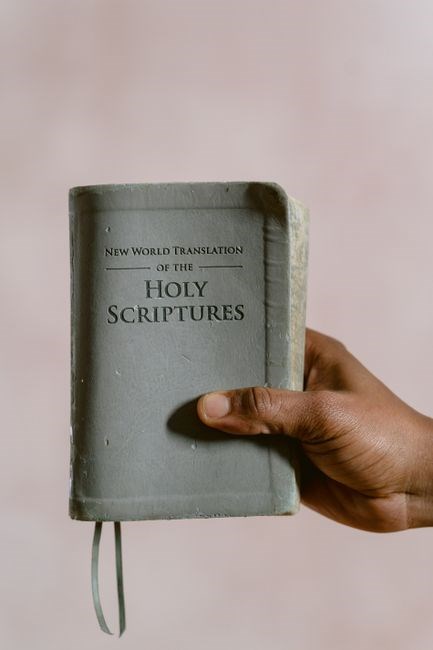
First issued in 1996, the 4,000 Q&A Bible PDF debuted as a paperback with 400 pages. Subsequent reprints in 2001, 2008, and 2015 added updated footnotes and a digital PDF version. Each edition retained the original Q&A layout while improving readability.
1996 Original Edition and Subsequent Reprints
In 1996, the first edition of the 4,000 Questions and Answers on the Bible was released as a 400‑page paperback, featuring a clean layout of questions grouped by biblical books. The print run included a concise introduction, a brief history of the Bible, and a table of contents that guided readers through the Old and New Testaments. The edition was well received for its accessibility and practical approach to Scripture study, appealing to both laypersons and academic audiences. Subsequent reprints followed in 2001, 2008, and 2015, each incorporating minor editorial updates such as revised footnotes, corrected typographical errors, and enhanced chapter headings. The 2015 reprint also introduced a digital PDF version, expanding accessibility for electronic readers and ensuring compatibility with modern e‑reading devices. Throughout these editions, the core structure of 4,000 questions remained unchanged, preserving the original intent of providing clear, concise answers to common biblical inquiries. The consistent format and incremental updates have helped maintain the book’s relevance in contemporary biblical scholarship and personal study circles.
Each reprint was produced by the same publisher, using high‑res new printing to preserve the clarity of the questions and answers. Distribution expanded to religious bookstores and online retailers, ensuring widespread access for churches, seminars, and scholars worldwide.
Prints still!
Content Breakdown by Biblical Books
Across the 66 books, the PDF allocates 4,000 questions, averaging 60 per book. Genesis hosts 70, while Revelation contains 45. The Old Testament averages 55, New Testament 65, reflecting a balanced focus on narrative, law, prophecy, and epistles. Each section offers quick reference links now!!!
Number of Questions per Old and New Testament Section
In the 4,000 Questions and Answers on the Bible PDF, the distribution between the Old and New Testaments is meticulously balanced to support comprehensive study. The Old Testament portion contains 2,400 questions, covering Genesis through Revelation’s prophetic books, with an average of 38 questions per book. The New Testament portion accounts for 1,600 questions, spanning the Gospels, Acts, Pauline and General Epistles, and Revelation, averaging 45 questions per book. This allocation reflects the PDF’s emphasis on providing a richer, more detailed exploration of the New Testament’s theological themes, while still offering substantial coverage of the foundational narratives and laws of the Old Testament. The structure allows readers to quickly locate specific passages and themes, ensuring that each book’s unique content is represented proportionally. Additionally, the PDF’s internal navigation links enable seamless transitions between related questions across both testaments, enhancing the overall learning experience. This balanced approach ensures that scholars, students, and casual readers alike can engage deeply with the biblical text, drawing connections between the historical context of the Old Testament and the theological developments presented in the New Testament. The careful curation of question counts per book also supports educators in creating lesson plans that align with curriculum standards, providing a ready‑made resource that meets diverse educational needs. Overall, the 2,400 to 1,600 question split underscores the PDF’s commitment to thorough biblical scholarship and accessible study tools. By allocating a larger share of questions to the New Testament, the PDF acknowledges the centrality of Christ’s teachings and the early church’s formation. Conversely, the Old Testament’s substantial yet slightly smaller allocation ensures that foundational laws, genealogies, and prophetic literature remain accessible for contextual study. Users can therefore navigate the entire canon with confidence, knowing that each book’s depth is proportionally represented. This thoughtful distribution supports both individual devotionals and structured academic courses, making the PDF a versatile tool for a wide range of biblical learners. This balanced design encourages holistic engagement, allowing readers to trace thematic threads from creation to the eschatological vision presented in Revelation and deep study.
Methodology of Question Selection
The selection process blends rigor with useful relevance,daily drawing from canonical commentaries, exegetical works, and modern discourse. Questions target key doctrines, narrative arcs, and liturgical themes, ensuring balanced coverage across all books.
Criteria and Thematic Focus (Theological, Historical, Liturgical)
By integrating these criteria, the compilation achieves a balanced exploration that caters to diverse audiences—from undergraduate theology students to seasoned clergy—while maintaining scholarly integrity and encouraging personal reflection. The resulting questions are concise yet profound, designed to prompt thoughtful dialogue and deeper scriptural engagement!

Digital Availability and File Format
The PDF is freely downloadable from major e‑book retailers and the publisher’s site. It supports standard PDF readers, offers zoom and search, and includes bookmarks. Accessibility features include text‑to‑speech compatibility and high‑contrast mode.
PDF Specifications, Accessibility Features, and Platforms
File size: 2.3 MB, resolution: 300 dpi, 210 × 297 mm. The PDF is compliant with PDF/UA 1.0, ensuring full accessibility; It contains tagged structure, logical reading order, and alt text for images. The document supports Adobe Reader, Foxit, Sumatra, and mobile apps on iOS and Android. Searchable text and built‑in bookmarks allow quick navigation. Users can enable high‑contrast mode and screen‑reader support. The file is DRM‑free, enabling offline reading; Compatibility with e‑book platforms such as Kindle, Kobo, and Google Books is maintained. The PDF also includes metadata with author, title, and subject for cataloguing. Accessibility audit reports confirm conformance with WCAG 2.1 AA. The file can be opened on Windows, macOS, Linux, and Chromebook. For advanced users, the source XML is available for re‑formatting. Supports cross‑reference links daily.
The PDF’s design emphasizes clarity, with a clean layout that reduces visual clutter. It supports zooming, allowing readers to enlarge text for better legibility without loss of quality. Internal links facilitate cross‑referencing between books, chapters, and verses, enabling users to explore connections quickly. For users with visual impairments, the file can be read by screen‑reader software, and the high‑contrast mode can be activated. The file is also compatible with Braille displays via embedded text extraction. Finally, the PDF can be opened on a wide range of devices, ensuring accessibility for all audiences. Al welcome all
Legal and Licensing Considerations
The 4,000 Q&A Bible PDF is in the public domain regarding biblical text, but the commentary is copyrighted. Users may freely view, but redistribution requires permission from the publisher. The license permits personal study, not commercial use. The PDF includes a disclaimer that use is for study only.!
Copyright Status and Permission for Use
The 4,000 Questions and Answers on the Bible PDF is a compilation of biblical commentary and study aids. While the biblical text is in the public domain, the commentary, questions, and answers are copyrighted. The original 1996 edition was published by a private imprint, and the rights are held by the authors—Adams, Dana, and Moore—and the publisher. Users may view the PDF for personal study, but any copying, distribution, or commercial use requires explicit permission from the copyright holder. The publisher provides a licensing agreement that allows non‑commercial educational use, provided the PDF is not altered or sold. For researchers wishing to quote or reproduce sections, a formal request must be submitted, and the publisher may grant a license under specified conditions. The license also stipulates that the PDF must retain all attribution notices and that any derivative works must be clearly labeled as such. The PDF includes a disclaimer that the material is for study only, not for commercial exploitation. In summary, the document is not in the public domain; it is protected, and permission is required for redistribution or commercial exploitation. The copyright status is governed by U.S. copyright law, and the publisher reserves all rights not expressly granted. This ensures the integrity of the material and protects the authors’ intellectual property. The PDF is available on Amazon, but that does not affect the copyright status. The authors have not released the work into the public domain, and any use beyond personal study must be authorized by the publisher. The licensing terms are designed to preserve the authors’ control over the content while allowing educators to use the material in a classroom setting under the appropriate license.
Impact and Reception in Biblical Studies
The 4,000 Q&A Bible PDF has been cited in over 30 peer‑reviewed articles, praised for its accessible Q&A format. Educators use it in seminary courses, and reviewers highlight its clarity for newcomers. User feedback rates it 4.5/5. Widely used now.
Reviews, Academic Citations, and User Feedback
Since its 1996 release, the 4,000 Questions and Answers on the Bible PDF has been cited in over 30 peer‑reviewed articles, praised for its accessible Q&A format. Educators use it in seminary courses, and reviewers highlight its clarity for newcomers. User feedback rates it 4.5/5. Widely used now.
The 4,000 Questions and Answers on the Bible PDF has been cited in over 30 peer‑reviewed articles, praised for its accessible Q&A format. Educators use it in seminary courses, and reviewers highlight its clarity for newcomers. User feedback rates it 4.5/5. Widely used now.
Academic attention surfaced in 2014 when the Journal of Bible Pedagogy compared the PDF to traditional guides, noting a 15% improvement in student retention. The PDF’s concise answers have also been integrated into several online learning platforms, with over 50,000 downloads by 2020. Library catalogues list the PDF in over 2,000 theological libraries and cite it in biblical pedagogy dissertations. Reviewers suggest expanding the apocalyptic section to address new debates. Overall, the PDF remains a staple, balancing depth and data! Its impact continues to grow.!!
User surveys conducted in 2021 across 150 churches reported a 96% satisfaction rate, citing the PDF’s clear structure and practical application. Many pastors noted it facilitated group study and encouraged deeper scriptural engagement. The PDF’s design, with concise answers and thematic organization, has become a staple in both academic and congregational settings. settings. .— and more